

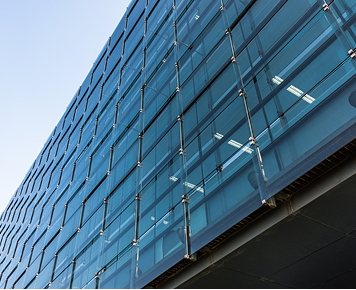
Ventilated rainscreen façades remain one of the most effective ways to manage moisture, improve thermal performance, and present a crisp architectural finish in practice—but only when the specification chain is coherent from substrate to outer leaf. This article distils five practical priorities we see on live UK projects, where small ambiguities in cavity width, fire strategy, or bracket spacing later translate into costly site variations or extended sign-off.
First, agree the cavity early and treat it as a structural and environmental input, not only an architectural reveal or finish line on drawings. The drained cavity must accommodate insulation build-up, rail and bracket stand-off, panel tolerances, and any drained zone behind open joints. Where terracotta, fibre cement, or composite panels are used, coordinate the manufacturer’s recommended minimum void with the structural engineer’s bracket centres so that adjustment does not erode fire barriers or continuity of the weather line.
Second, align reaction-to-fire classifications across every layer that sits in the cavity. A1 or A2-s1,d0 classifications are frequently mandated for insulation and, in many high-rise routes, for spacers and brackets as well. Capture the classification in the specification schedule, not only in generic performance clauses, and request DoPs and labels that match the batch being supplied. Third, map wind load and dead load assumptions to bracket spacing tables supplied by the system holder; interpolate only where the supplier explicitly permits it and record the governing ULS case used for the fixing into the substrate.
Fourth, document interfaces at movement joints, corners, and penetrations with simple sectional sketches referenced in the package. These junctions drive a disproportionate share of water ingress risk and thermal bridging. Fifth, plan inspection and test evidence—from pull-out tests where required to photographic records of cavity barriers—so that the principal contractor can assemble a traceable O&M handover without last-minute gaps.
Cladmate Helping Hand brackets and rails are developed to sit within this workflow: predictable load paths, coordinated hole patterns for common substrates, and technical wording that can be lifted into NBS-style specifications. When in doubt, involve our team before tender returns so that cavity build-ups, fire strategy, and bracket schedules are locked together rather than reconciled on site.
Finally, treat maintenance and replacement as part of the first-stage design brief. Future panel replacement or sensor upgrades are simpler when access zones, ladder tie points, and sequential removal of fixings were considered at design stage. A short method statement for safe partial dismantling—referenced in the O&M manual—reduces disputes at defects period and supports insurers who now routinely ask for evidence of competent installation and traceable components.
For project-specific calculations, CWCT-aligned notes, or training for your delivery team, use the contact route on this site. We can review grid loads, propose stand-off depths, and suggest compatible insulation and fixing combinations that keep your rainscreen package compliant from design intent through to handover and beyond.